01
Early Drawings, Etchings, Offset PrintsBudapest
1972
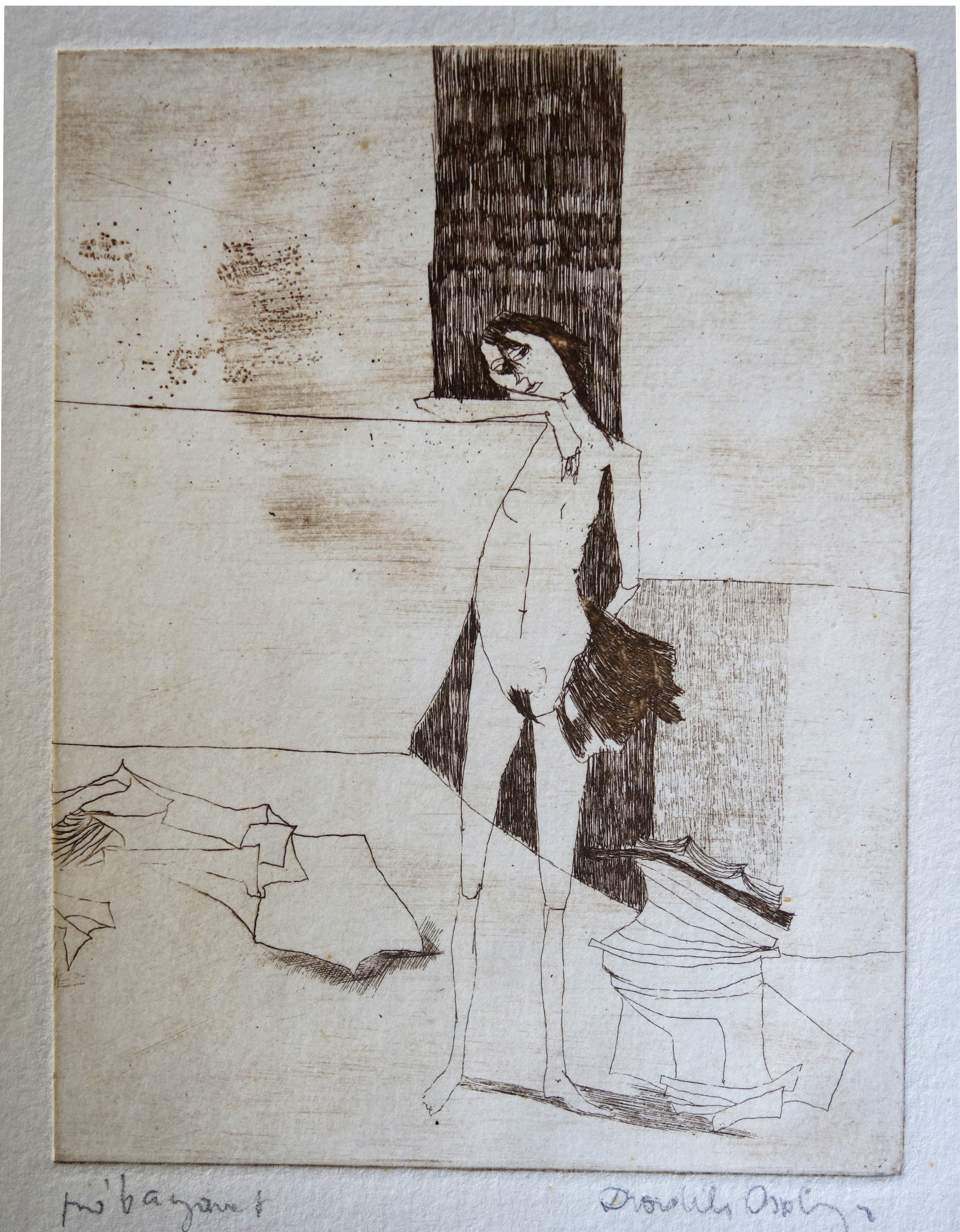
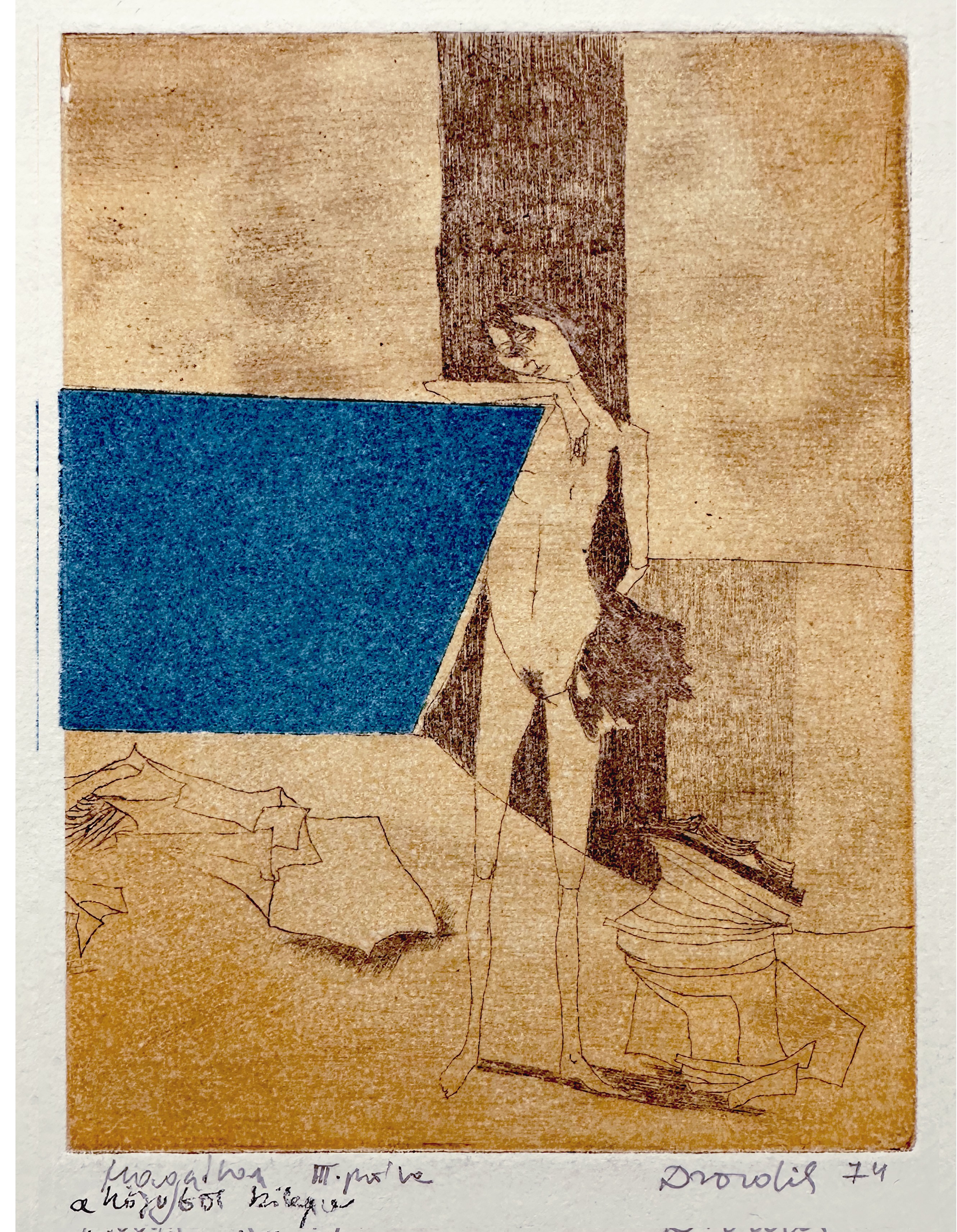
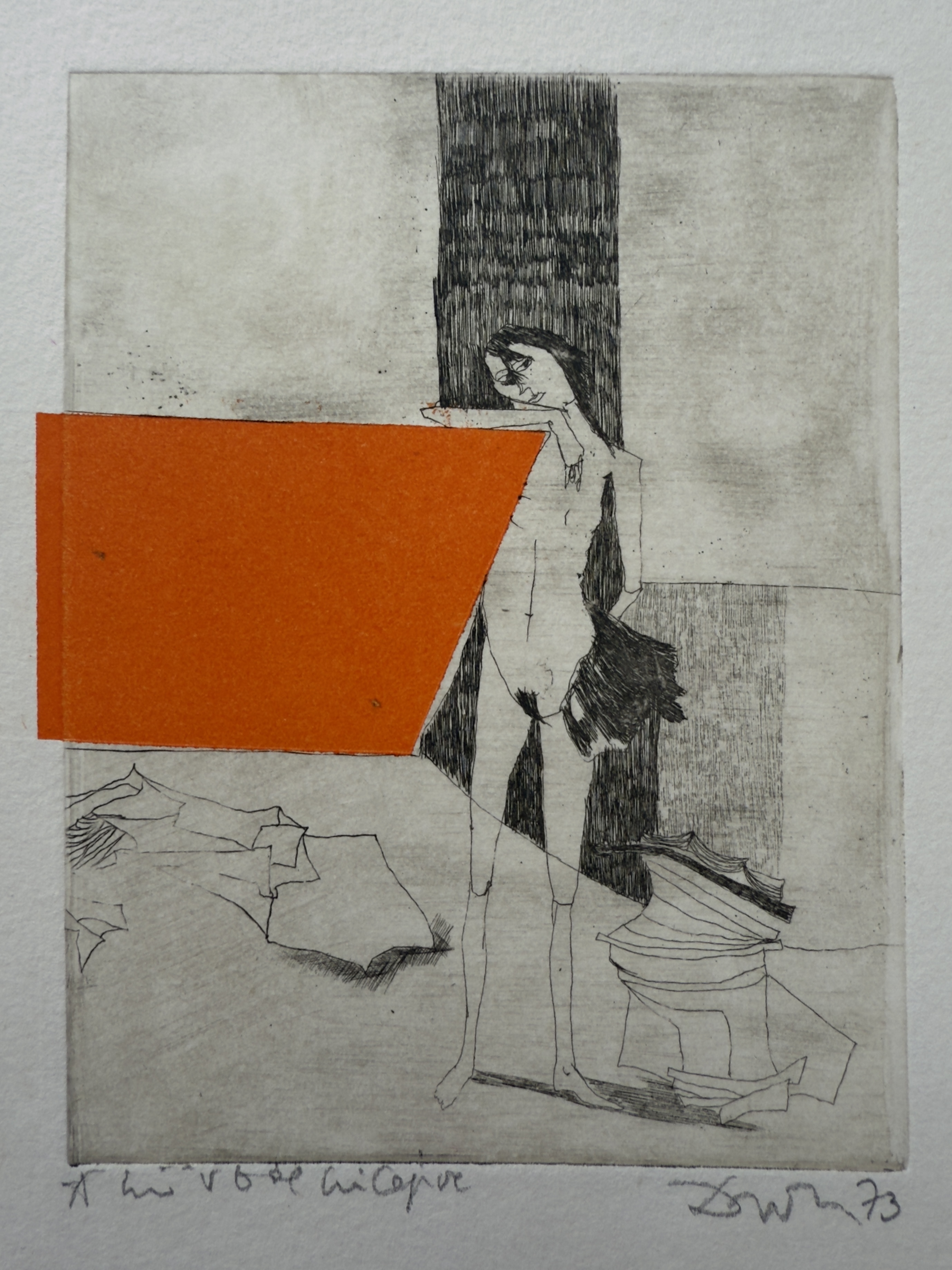
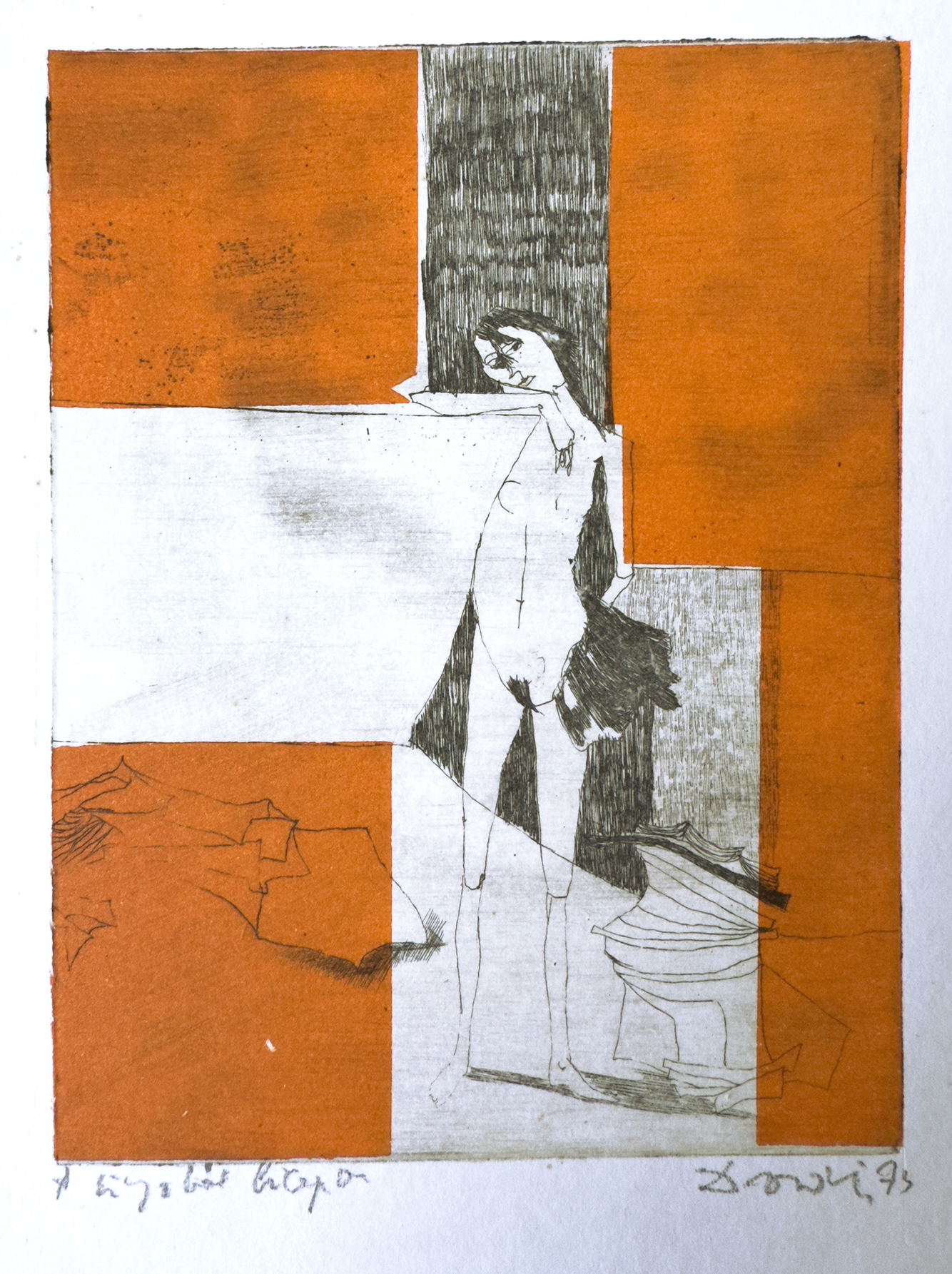
Approx. 400 etchings and around 400 drawings and offset prints, made in 1972. It is clear: these are small diary-like symbolic-existential psychodramas, not student debris.
EtchingOffset print
Dr. habil. Orsolya Drozdik DLA, conceptual artist whose interdisciplinary practice has been central to feminist and post-conceptual art in Central and Eastern Europe since the mid-1970s.
Born in Abda on February 15, 1946, Drozdik is a Hungarian conceptual artist whose interdisciplinary practice has played a pioneering role in feminist and body-centered art in Central and Eastern Europe since the mid-1970s. Working across drawing, printmaking, etching, performance, photography, installation, painting, video, and theoretical and literary writing, she has consistently interrogated the historical construction of femininity, scientific epistemologies, and the gendered gaze embedded in Western art history.
Her formation begins from 1958 to 1964 when she studied in the evening classes of the Győr Fine Arts Circle, then completed Hungarian and drawing studies at the Szeged Teacher Training College (1964–68), before the Hungarian Academy of Fine Arts in Budapest: Painting under Szilárd Iván (1970–72), Graphics under Károly Raszler (1972–74), then the postgraduate master program (1974–77). She later earned a DLA (University of Pécs, 2004) and habilitation (Hungarian University of Fine Arts, 2007).
From 1972 onward she built the conceptual structure that would organize the whole career: Getting Out of the Book, Image Bank, Individual Mythology, Nude Model, Identification, Commonplace Symbols, I Am a Photograph: Blink and Sigh, and the feminist claim that her own image, her body's representation, was her property and her art. It is clear: the woman artist's point of view is not an add-on in the later work, it is already the engine.
"My images, images of my body are part of my art. They are my own property. I don't let anyone represent me, draw me, and steal or take my image: I am the image, I am the one who is represented as well as the one who represents my image." Budapest manifesto statement, 1975–78.
She left Hungary in 1978 and settled first in Amsterdam, where she made the Pornography series (1978–79). She then worked in Vancouver and Toronto on a group of works (1979–81) including Transparency, Original and Copy, In Someone's Shadow: I Positioned Myself in Their Place, Temporary Coherence, Double, Diverted Diagonal, Division: Dialogue Sculpture, Erased History, I Try to Be Transparent, and Hijacking the Shadow, before settling in New York in 1981. There, beginning with Me and Art History and the Biological Metaphors painting series, she developed Adventure in Technos Dystopium, the overarching title for the New York project, and its closing cycle Manufacturing the Self, which re-stage the canonical visual languages of anatomy, medicine, and classical representation in order to expose their ideological foundations in the Scientific Discourse.
From the 1980s onward she has exhibited widely in Europe and North America, with major solo museum exhibitions at the Musée des Beaux-Arts de Nantes, the Ludwig Museum (Budapest), the Kiscelli Museum (Budapest), the Ernst Museum (Budapest), MODEM (Debrecen), the Rómer Flóris Museum (Győr), and the Museum of Contemporary Art and Art Pavilion (Zagreb), alongside inclusion in landmark shows such as the São Paulo Biennial, the Biennale of Sydney, Gender Check (MUMOK / Zachęta), the touring re.act.feminism archive, and Multiple Realities (Walker, Phoenix, Vancouver). Alongside her practice she taught internationally, from Temple and NYU to UC San Diego, before serving as professor at the Hungarian University of Fine Arts (2005–2015), where she is now Professor Emerita. She was elected to the Széchenyi Academy of Letters and Arts in 2015.
In the artist's own voice
I began with the female nude, not as subject but as evidence.
In the academy I was taught to draw the model the way art history had always drawn her: an object arranged for someone else's looking. So I stepped out of that book. My images, the images of my body, are my property. I am the one represented and the one who represents. That refusal to be drawn by others has been the engine of everything since.
From the etchings onward I have treated the archive as a live instrument. The Image Bank taught me that no picture is innocent: existing images form the horizon that decides what can be seen and who gets to make it. Individual Mythology and Nude Model turned the academy's own visual language against itself, setting a woman's point of view inside and against a system built to exclude it.
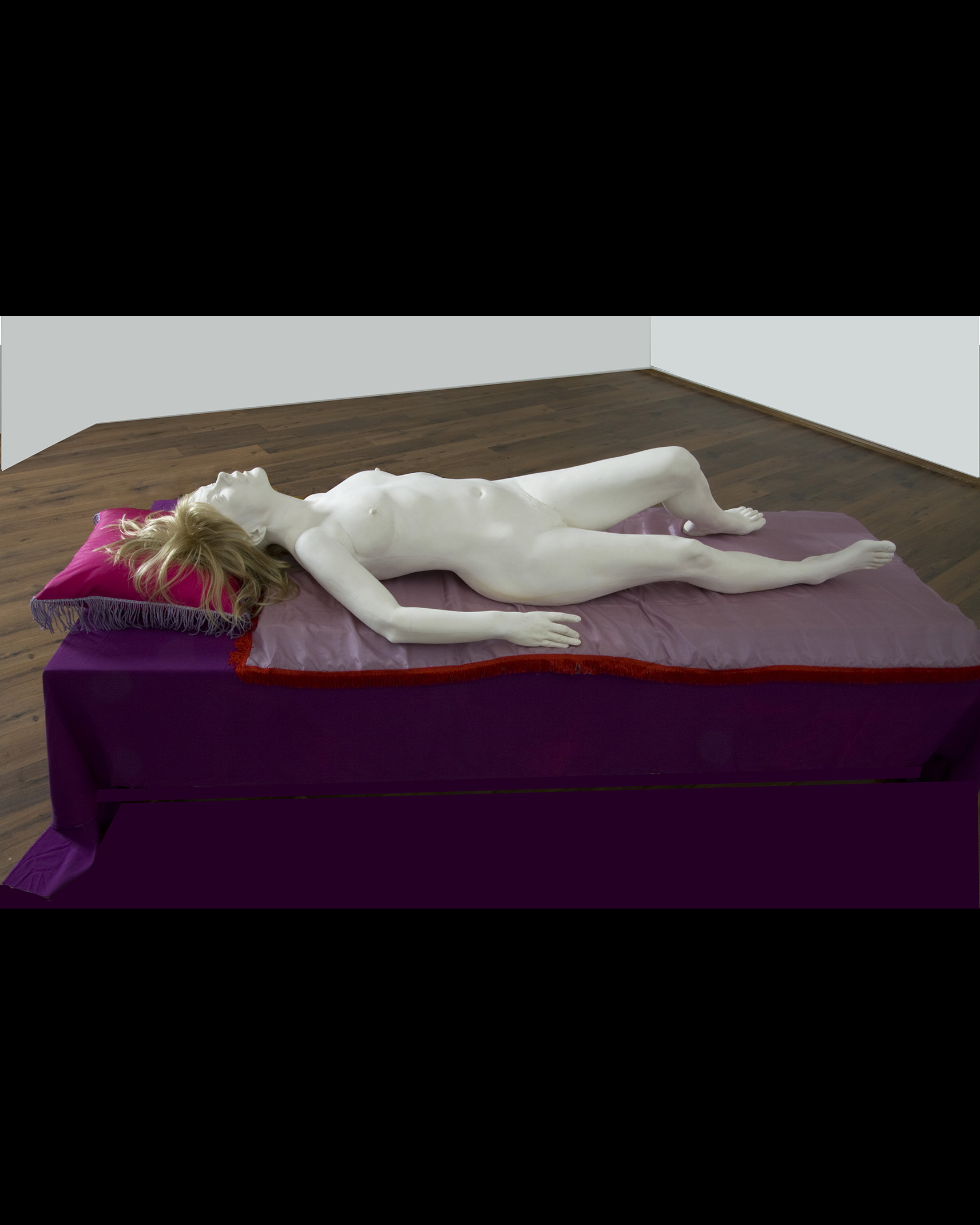
Between 1984 and 1995 I extended this method to scientific and medical discourse. Adventure in Technos Dystopium and Manufacturing the Self examine how anatomy, natural science, and medical illustration have represented the female body, from the wax "medical Venus" to the museum display case. I photographed scientific collections, built installations, and, in 1984–86, worked through the invented historical figure of Edith Simpson, an 18th-century woman scientist, to show that these supposedly objective images carry the same assumptions about gender as the art-historical nude. I work across drawing, printmaking, performance, photography, installation, painting, video, and writing, and I treat theory and studio practice as one activity rather than two.
The early works are not juvenilia. They are the beginning of everything. The etchings, Individual Mythology, Nude Model, Blink and Sigh, the Image Bank concept, the use of projection, erasure, duplication, and poetry: the grammar is already there.
Drozdik's project begins with the academic female nude, with the body as image-bank, with patriarchal representation as institution, and with the urgent need to produce a woman's point of view from inside and against that system.
From there the site follows the book's three-chapter structure, laid out below.
From the Budapest etchings to the New York installations
Approx. 400 etchings and around 400 drawings and offset prints, made in 1972. It is clear: these are small diary-like symbolic-existential psychodramas, not student debris.
The conceptual key. Existing images form a horizon that already structures seeing and making. She names the problem before most critics around her could even register it.
About line becoming body, body becoming shadow, shadow breaking into fragments, then reassembling. A tiny masterpiece.
A first split in selfhood and representation: the model is me, the model is not me. Gender, dress, identity, and erasure enter together.
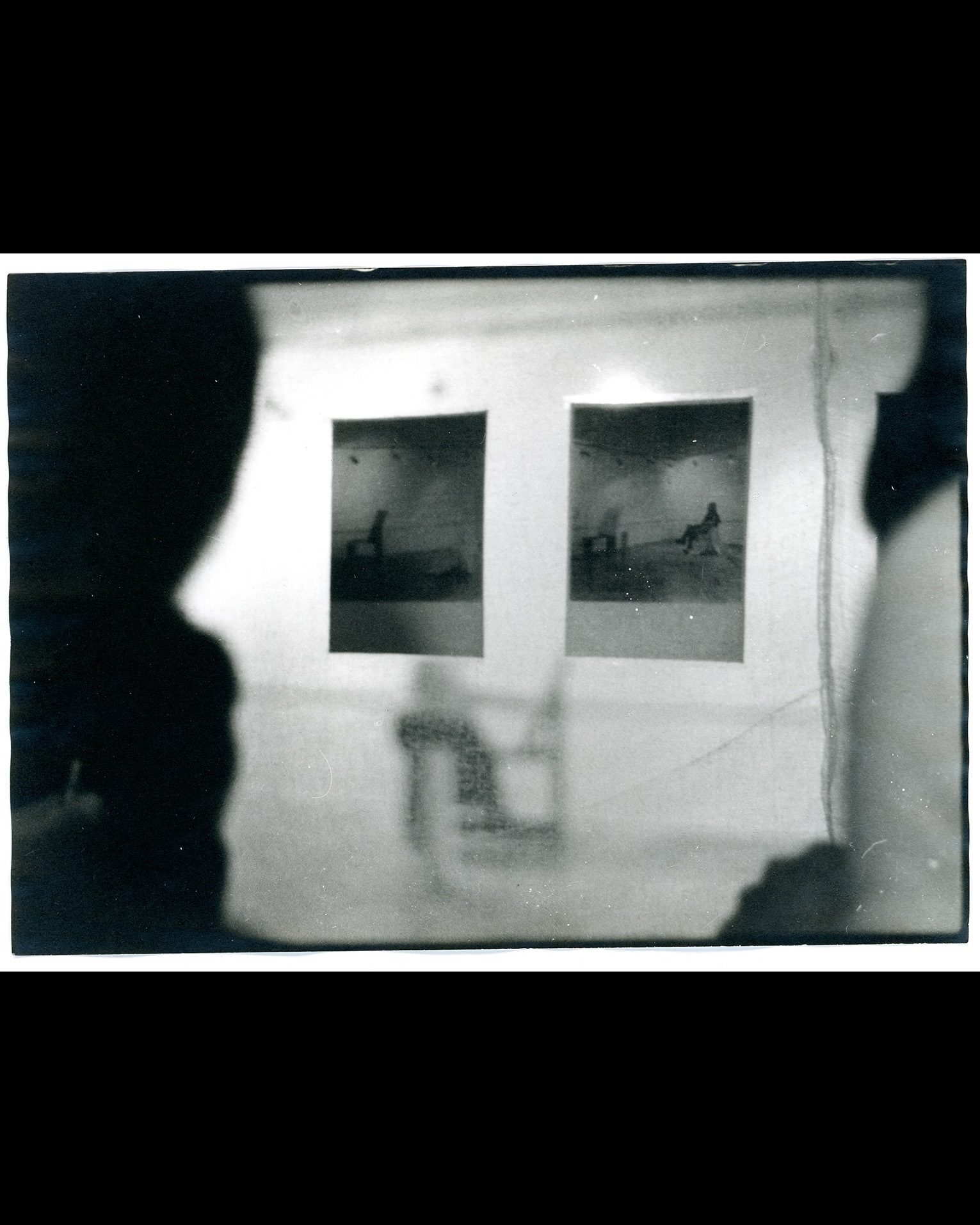
Drozdik's ars poetica. Photography, performance, photo-offset, text, erased drawings, myth against official history. The title is not decorative, it's the whole wager.
The academic nude as patriarchal institution. The model as social code, art-historical inheritance, and site of identification and refusal.
A study of the recycled visual clichés of mass culture and official imagery, made as photo and photo-offset series at the academy.
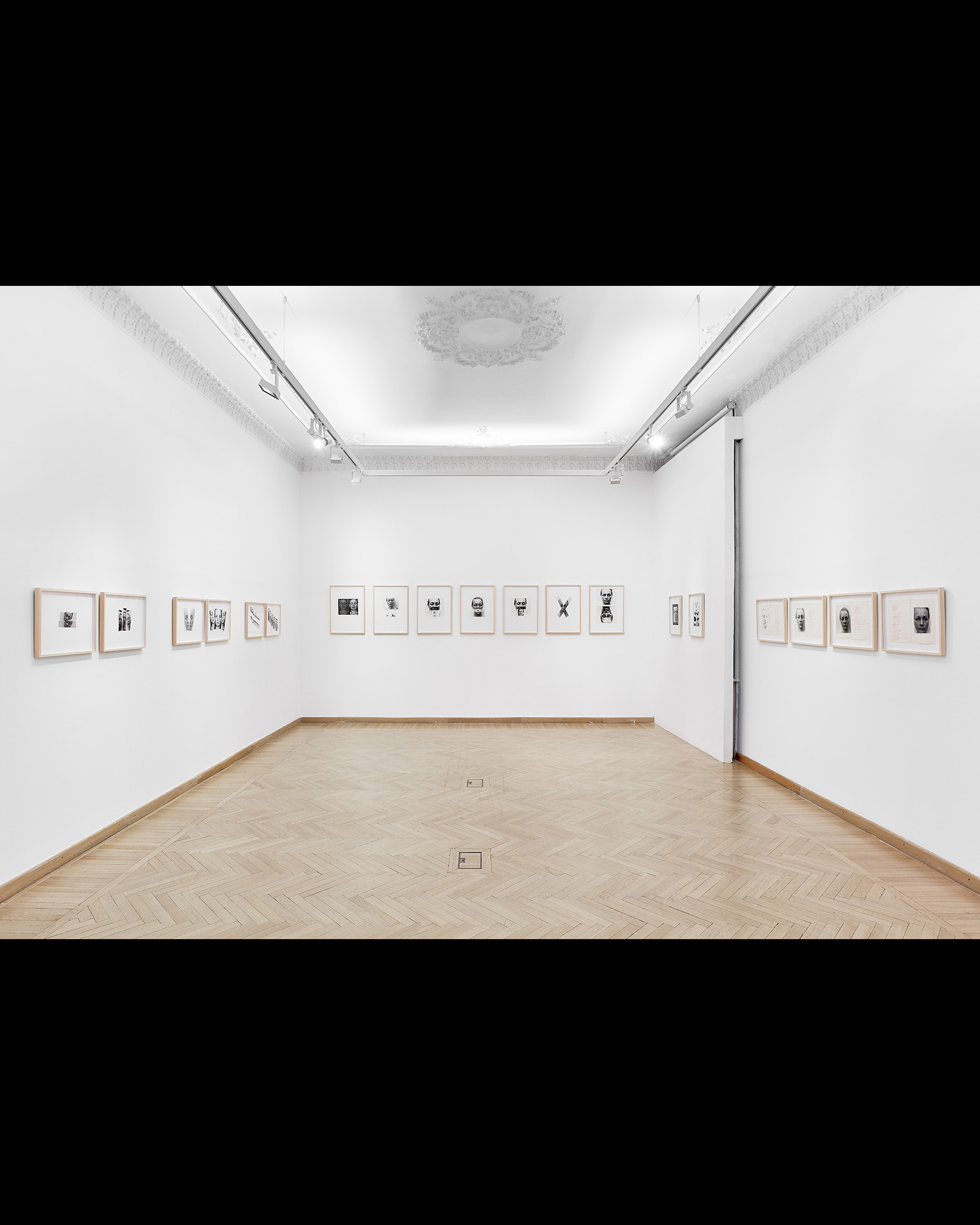
Test strips, self-portrait fragments, typed love poems, anti-glamour, anti-masquerade. One of the sharpest nodes in the whole early practice.
After leaving Hungary she makes the Pornography series in Amsterdam (Pornography I, 1978; II and III, 1979), extending the critical method from art-history representation into pornographic representation.
On arriving in New York she makes Me and Art History and the Biological Metaphors painting series, moving from the art-historical body toward the scientific and medical body, and toward a theoretical critique of the scientific representation of truth.
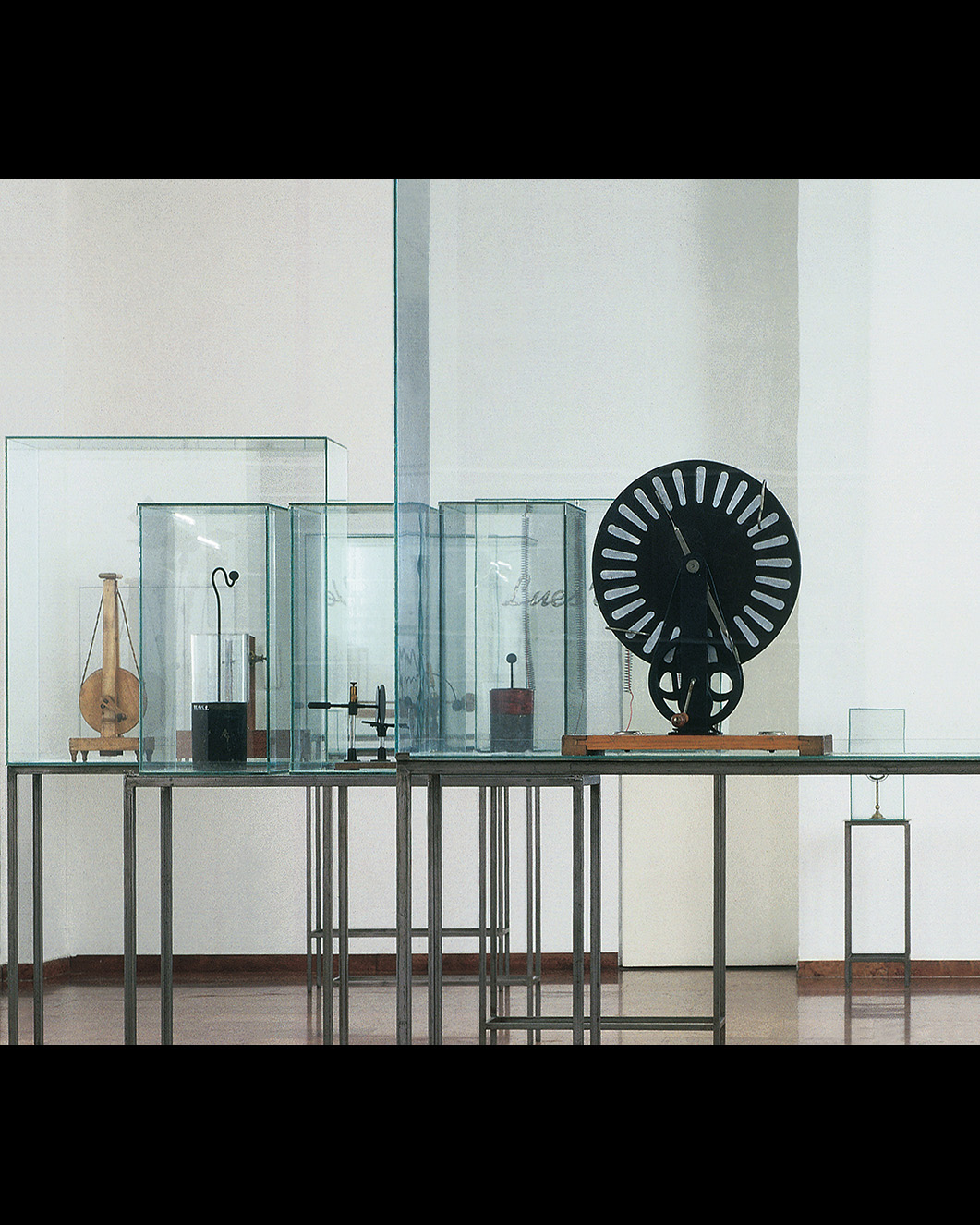
Adventure in Technos Dystopium is the overarching title for the whole New York project. This is where the archive gets vast: Dystopium Infinite, Edith Simpson, Popular Natural Philosophy, Morbid Conditions, Fragmenta Naturae, Cynical Reason, and the closing cycle Manufacturing the Self (Medical Erotic, Body Self).
Other works: @orshi_drozdik on Instagram →
Public collections and institutional standing, for museums, galleries, and collectors.
Professor at the Hungarian University of Fine Arts (2005–2015), now Professor Emerita. Member, Széchenyi Academy of Letters and Arts (SZIMA), elected 2015.
Authority records and institutional catalogues for cross-reference and verification.
Image plates and current activity, complementary to the printed volume.
Catalogue PDFHosts the full Ludwig retrospective catalogue.
AuthorityIdentifiers, name variants, and archival cross-reference, including the Szeemann and Messer papers context.
Dr. habil. Orsolya Drozdik DLA (Orshi Drozdik). From the Abda childhood and the Budapest etchings, through Amsterdam, Vancouver and Toronto, to New York, Adventure in Technos Dystopium, Manufacturing the Self and the museums. Filter by track, click any event to expand it.
I began with the female nude, not as subject but as evidence.
In the academy I was taught to draw the model the way art history had always drawn her: an object arranged for someone else's looking. So I stepped out of that book. My images, the images of my body, are my property. I am the one represented and the one who represents. That refusal to be drawn by others has been the engine of everything since.
From the etchings onward I have treated the archive as a live instrument. The Image Bank taught me that no picture is innocent: existing images form the horizon that decides what can be seen and who gets to make it. Individual Mythology and Nude Model turned the academy's own visual language against itself, setting a woman's point of view inside and against a system built to exclude it.
Between 1984 and 1995 I extended this method to scientific and medical discourse. Adventure in Technos Dystopium and Manufacturing the Self examine how anatomy, natural science, and medical illustration have represented the female body, from the wax "medical Venus" to the museum display case. I photographed scientific collections, built installations, and, in 1984–86, worked through the invented historical figure of Edith Simpson, an 18th-century woman scientist, to show that these supposedly objective images carry the same assumptions about gender as the art-historical nude. I work across drawing, printmaking, performance, photography, installation, painting, video, and writing, and I treat theory and studio practice as one activity rather than two.
Her formation was shaped by the traumatic political afterlife of the Beneš decrees (her mother's family stripped of property and citizenship in Pozsony/Bratislava, 1945) and a family open to modern literature, critical ideology, feminism and psychoanalysis.
Her first formal training, in the fine-arts study circle in Győr, before the Szeged teacher-training college (1964–68) and then the Academy in Budapest.
She moved from Painting into the freer Graphics Department, studying life drawing, etching, composition, art history, geometry, and dialectical materialism. She makes her first photographs in the 1974–75 academic year.
Made in 1973: small diary-like symbolic-existential psychodramas, not student debris. Copper-plate intaglio, the root of the whole practice: the woman drawing the woman's body, in Getting Out of the Book. Now surveyed at the Rómer Museum, Győr (2026).
The foundation of the practice: existing images form a horizon that already structures seeing and making. She turns the academy's own image bank of 19th- and 20th-century nude-model documents back on itself.
Her ars poetica, and the first systematic critical analysis of how art history and art education represent the female nude. The manifesto claim: "I am the image, I am the one who is represented as well as the one who represents my image." Works now held by the Ludwig and Szépművészeti museums.
One of the sharpest nodes in the whole early practice: anti-glamour, anti-masquerade, with love poems integral to the photo series. Rarely shown publicly until its Budapest debut at Mai Manó House in 2022.
She receives the Kondor Béla Award of the Hungarian Academy of Fine Arts (1976) and co-founds the Rózsa Circle (1976–77), followed by the Young Artists' Studio stipend (1978).
She leaves Hungary in 1978 and settles first in Amsterdam, opening the second geographic chapter, before the Canadian years and the move to New York.
In Amsterdam she makes the Pornography series (Pornography I, 1978; II and III, 1979). The critical method extends from art-history representation into pornographic representation.
Made in Vancouver and Toronto, this group of works is built on drawings and erasure, rephotographing, and Xerox, done fast and ferocious. Listed in chronological order, each with its city:
She settles in New York in 1981 and continuously travels, working and exhibiting in numerous European cities including Amsterdam. She works and exhibits with the Colab Group, and her work enters into close relation with the feminist, critical and experimental literary practices of New York postmodernism.
The move from art history into the scientific and medical discourse of the body. First shown at Óbuda Galéria / Budapest Galéria, 1984, then Mercer Union, Toronto.
Adventure in Technos Dystopium is the overarching title for the New York project. Deconstructing 18th- and 19th-century scientific representation of truth, she photographs displays in European and American science museums (the Dystopium Infinite photographs) and, from 1985–86, invents the fictional 18th-century woman scientist Edith Simpson.
The first of a long run of international fellowships supporting the New York years.
Popular Natural Philosophy (1988) and subsequent Technos Dystopium chapters, plus Morbid Conditions (1989) and Fragmenta Naturae (1990). She also shows at CEPA, Buffalo (1988) and the New Museum (1989).
One of several New Museum appearances that establish her within the New York institutional scene.
Cynical Reason IV: Brain Doormat (1991, rubber) is now in the Hungarian National Gallery, inv. MM2021.154. Her lithograph Dissection (1990) is also held there, inv. MM90.168.2.
Two major New York fellowships: the Pollock-Krasner Foundation grant and the Gordon Matta-Clark Trust. A second Pollock-Krasner grant follows in 1993.
A residency fellowship at the Fondation Cartier pour l'art contemporain, Paris, extending her European support during the New York years.
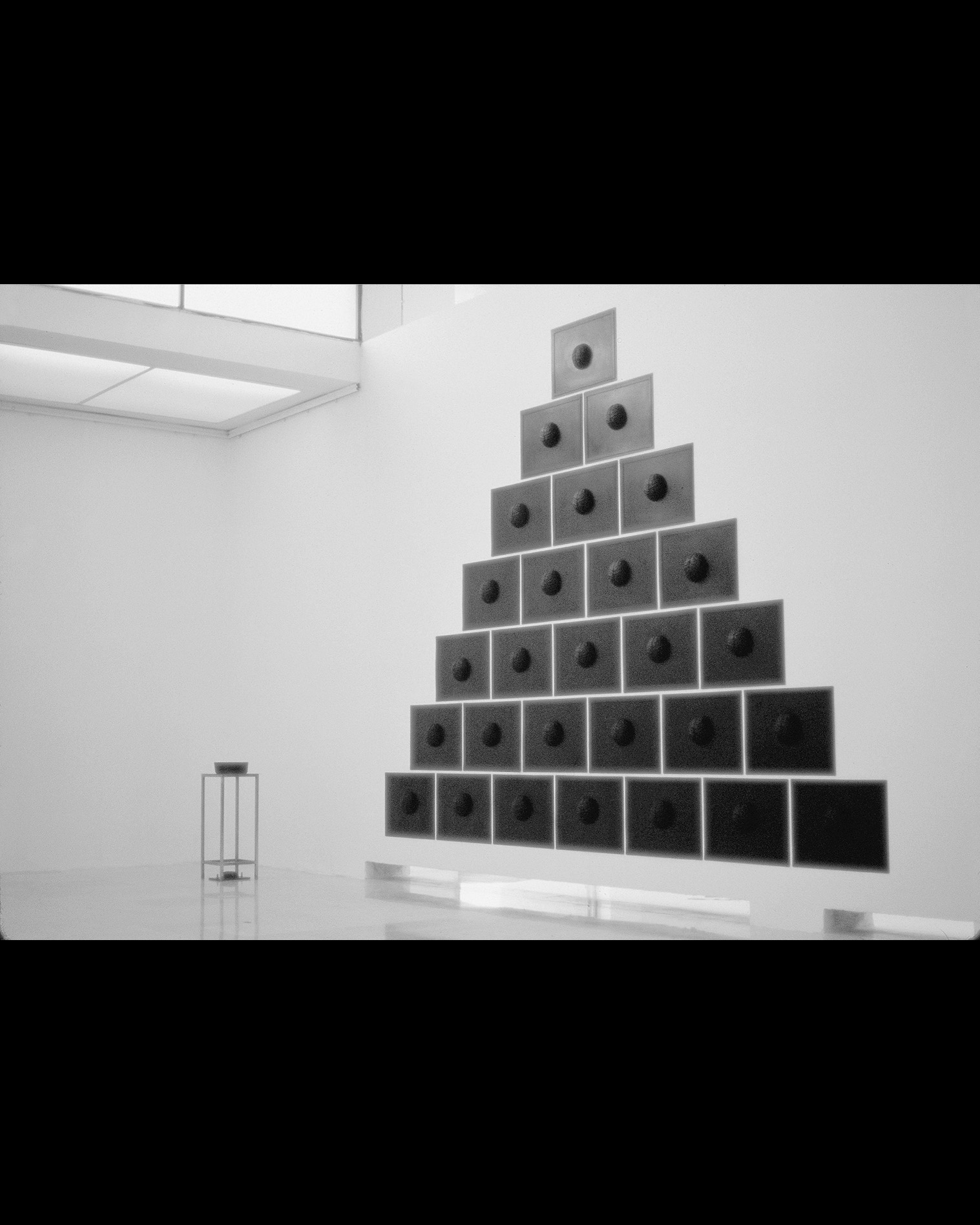
Part of the Manufacturing the Self installation series (1990–95), a deconstruction of medical representations of the female body. First shown at the 9th Biennale of Sydney, 1992–93.
Her international profile peaks: the Sydney Biennial (1992–93), MIT's Science Fictions (1992), and the 22nd São Paulo Biennial (1994).
Part of Manufacturing the Self, the closing cycle of the New York project.
Holland Cotter's review in The New York Times (11 June 1993), followed by coverage in Art in America (January 1994), marks her critical reception at the height of the New York years.
A solo museum exhibition in France, closing the 1970–95 span of the monograph.
Jonas Storsve, Orshi Drozdik: Le corps pathologique, La Salle Blanche, Musée des Beaux-Arts de Nantes, 1995 (ISBN 2-906211-22-2). The catalogue accompanying her French museum solo.
She edits and publishes a foundational Hungarian anthology of feminist theory, alongside essays of her own in Balkon (1995–96).
An individual grant from the Adolph & Esther Gottlieb Foundation, New York, one of the honours bridging her New York and Budapest years.
Her major retrospective. The full catalogue (ed. Dóra Hegyi, essays incl. John C. Welchman) is archived open-access at REAL / MTAK.
Catalogue PDF →The retrospective catalogue, edited by Dóra Hegyi with essays including John C. Welchman, is archived open-access at REAL / MTAK and cited frequently in the MER monograph.
Catalogue PDF →The retrospective travels; a Győr showing (Individual Mythology, Medical Venus, Young and Beautiful) follows in 2004.
The catalogue for the Croatian retrospective (Strast za prisvajanjem), Museum of Contemporary Art, Zagreb, 2003.
She receives the Munkácsy Mihály State Art Award in 2003, and completes her DLA doctorate, "From the Conceptual to the Postmodern," at the University of Pécs in 2004.
As a habilitated professor she divides her time between Budapest and New York, teaching a generation of younger artists while continuing to exhibit internationally. She is now Professor Emerita.
Her book summarizing her methodology and process, rooted in the 1970s conceptual movements in Hungary.
Digital prints featuring fragments of drapery and naked women from the history of art, part of the late turn onto modernism itself.
A major touring survey of historic feminist performance art, opening at the Akademie der Künste, Berlin and travelling to Ljubljana and Erfurt.
Bojana Pejić's landmark survey of gender in Eastern European art, at the Museum Moderner Kunst Stiftung Ludwig Wien (MUMOK), Vienna and the Zachęta National Gallery, Warsaw.
A thematic retrospective in Debrecen alongside international group showings of contemporary artists from Hungary.
The re.act.feminism performance-art archive keeps travelling across Europe, closing where it began, at the Akademie der Künste in Berlin:
Part of the late cycles (Lipstick Paintings, It's All Over Now Baby Blue) that turn her critical method onto the methods and technique of painterly modernism.
One of the highest honours for an artist in Hungary, marking her formal canonization at home.
A solo exhibition at FLUX Galéria, opened with the performance It's All Over Now Baby Blue │ Most mindennek vége baba kék.
A solo showing of the medical-body work in the Semmelweis Orvostörténeti Múzeum, placing her Medical Venus and blood-cell imagery inside a museum of medicine.
At the Bajor Gizi Actors' Museum (National Theatre History Museum and Institute), a showing built around the Free Dance strand of Individual Mythology.
A solo exhibition at Budapest Galéria pairing the sensual and the material in her recent work.
A solo presentation of the Cell Paintings at A.P.A. Galéria, Ateliers Pro Arts Center.
Radical women artists behind the Iron Curtain, the survey that reframed her internationally as a major Eastern European figure.
O.D.F.A.M., the Orshi Drozdik Feminist Art Museum, is her concept of the museum itself as an artwork: an artist-authored feminist institution turned into a medium. It was first exhibited at Knoll Galéria (Hans Knoll), Vienna.
A twenty-year survey of her photography and the Budapest debut of Blink and Sigh. Accompanied by a book she edited.
A solo booth (Az én manufakturálása: Patologikus Normális) with Einspach Fine Art & Photography at Frieze Masters 2022, presenting Manufacturing the Self and the Edith Simpson work.
The book accompanying the Mai Manó survey of her photography 1975–1995, edited by the artist with curator Lili Boros.
A leading Hungarian cultural award, capping a run of national recognition.
A major museum survey of experimental art from the Eastern Bloc, travelling across North America:
The definitive volume on the work, writings and exhibitions 1970–1995, with texts by John C. Welchman and Orshi Drozdik.
John C. Welchman (ed.), Orshi Drozdik: Adventure in Technos Dystopium — Work, Writings, Exhibitions 1970–1995, MER. Paper Kunsthalle, Ghent, 2024. The base text for this timeline: its structure, titles, dates, and lists of works.
A run of major museum group exhibitions across Europe and the United States through 2025 and into 2026:
At Art Brussels 2026 the €5,000 '68 Forward Prize, awarded to the most outstanding booth in the '68 Forward section, went to Einspach & Czapolai Fine Art for their solo presentation of Orshi Drozdik.
'68 Forward Prize →Now on view: a chamber exhibition of the earliest etchings, drawings, an animated film and poems, returning the origins of the œuvre to the region where she grew up.
Museum listing →Selected reviews, interviews, and features on Orshi Drozdik, drawn from the artist's bibliography. From The New York Times, Artforum and Art in America to Balkon, Új Művészet and Élet és Irodalom. Filter by language or use the decade jumps.
"A figure disfigured."Holland Cotter
Forgotten female artists shine in the Frieze Masters spotlight.Ferren Gipson
"I was the model and the one who drew the model."Forián Szabó Noémi (interview)